


Why Tub-to-Shower Conversions Are the Smart Move in 2025
The traditional bathtub is fading fast in many American households. For today’s homeowners and property flippers, tub-to-shower conversions deliver a perfect mix of resale appeal, accessibility, and practical function.
Whether you’re modernizing an outdated bathroom or preparing a home for market, a conversion is one of the highest-ROI remodeling moves you can make. According to Remodeling Magazine’s 2024 Cost vs. Value Report, bathroom remodels average a 73.7% ROI—and conversions rank among the most requested upgrades.
Think of it this way: buyers may never fill a tub, but everyone showers daily. Why not give them a sleek, accessible, and low-maintenance shower that sells the home faster?
Benefits That Resonate With Buyers & Homeowners
When planning content and conversion-focused upgrades, you want benefits that match real buyer personas—families, retirees, busy professionals, and real estate investors. Tub-to-shower conversions check every box.
1. Accessibility & Safety
- Low-threshold or curbless entry reduces trip hazards.
- Built-in grab bars add peace of mind for aging residents.
- Wider entry = ADA-compliance options for multi-generational homes.
2. Modern Style
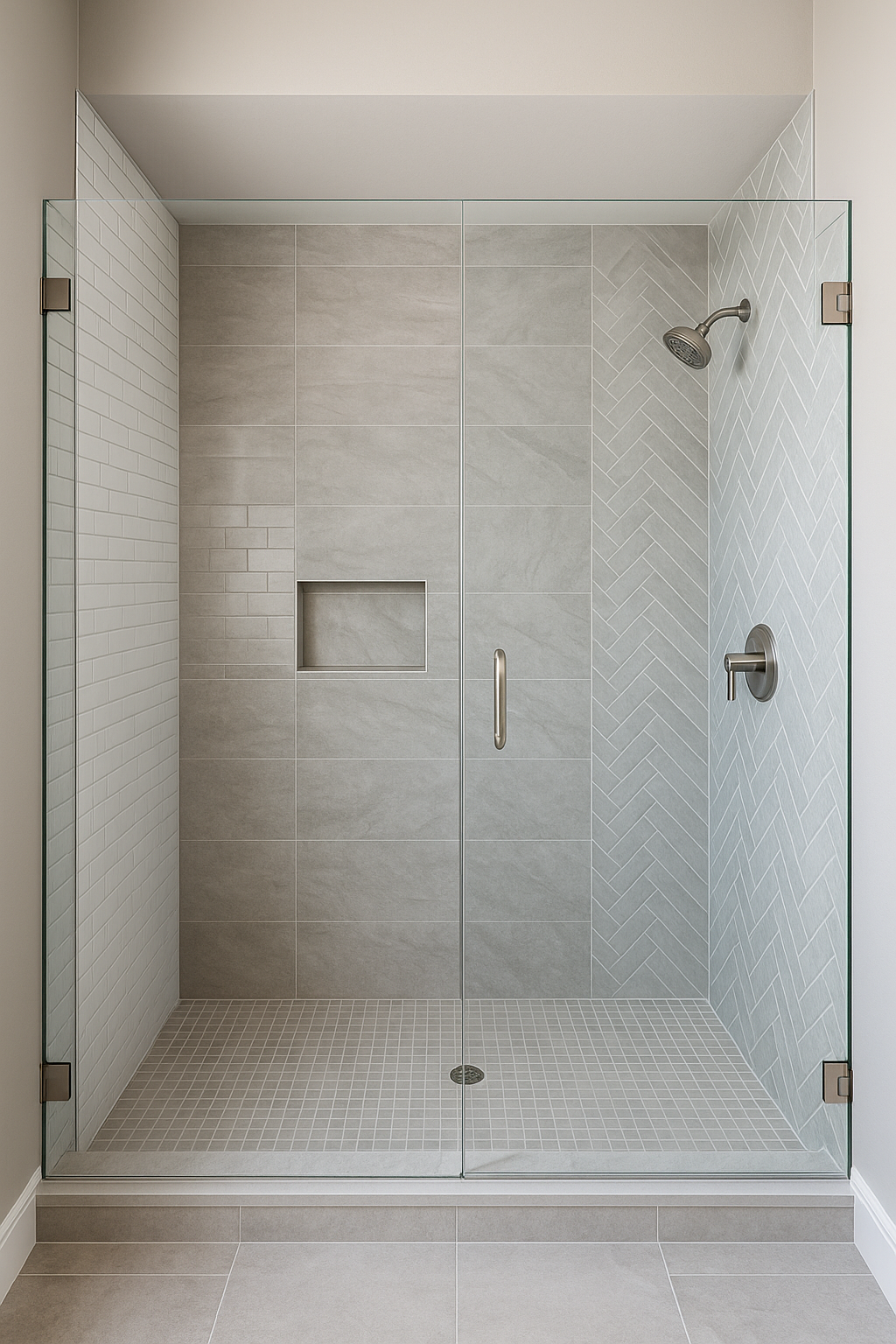
- Frameless glass doors create a luxury spa vibe.
- Large-format tiles make small spaces look bigger.
- Matte black, brushed brass, or chrome fixtures appeal to design-savvy buyers.
3. Space & Functionality
- Showers free up floor space in compact bathrooms.
- Built-in niches = clutter-free storage.
- Multi-jet or rainfall shower heads enhance daily routines.
4. Resale Value
- Appeals to young professionals who rarely use tubs.
- Attracts aging-in-place buyers seeking safety features.
- Boosts appraisal value and marketability for flips.
The Conversion Process: What Actually Happens
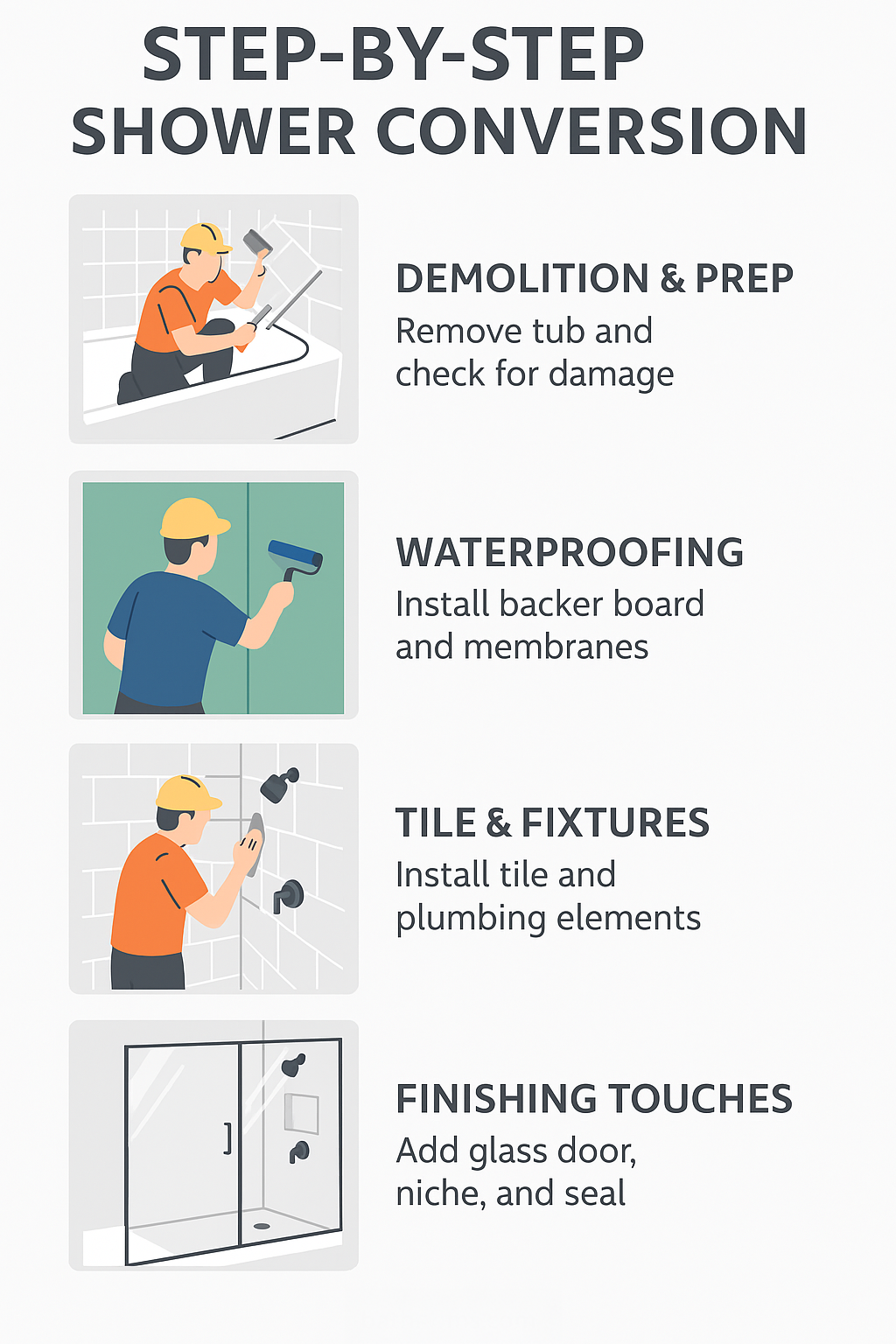
Many homeowners imagine a conversion as a simple “rip out and replace.” But the reality is a structured, step-by-step remodel. Educating your audience on this process builds authority and trust.
 Step 1: Demolition & Prep
Remove tub, surround, and fixtures. Check for hidden damage (such as rot, mold, or leaks).
 Step 2: Waterproofing
Install waterproof backer board and membranes—this is non-negotiable for longevity.
 Step 3: Pan & Drain
Custom or prefabricated shower pan set with the correct slope for proper drainage.
 Step 4: Tile & Fixtures
Tile installed with correct spacing, sealed grout, and aligned drains/fixtures.
 Step 5: Finishing Touches
Glass door, lighting, niche installs, and final waterproof sealing.
Design Options That Sell Homes Faster
Tub-to-shower conversions don’t have to be cookie-cutter. Confident design choices have a direct impact on buyer psychology and resale timelines.
 Layout & Tile Patterns
- Subway tile (classic, timeless)
- Chevron/herringbone (modern sophistication)
- Large-format tiles (visual space expansion)
 Color Palettes
- Neutral whites, grays, or taupes (widest buyer appeal).
- Accent strips or niches with mosaics for character.
- Matte finishes = low-maintenance, fingerprint-resistant.
 Glass vs. Curtain
- Frameless glass = sleek, high-end appeal.
- Semi-frameless or sliders = cost-effective yet modern.
- Avoid curtains—they read “dated” to buyers.
Cost Breakdown: What to Expect in 2025
Homeowners care about budget vs. payoff. Here’s a transparent breakdown (national averages, 2025):
- Basic Conversion (prefab pan, tile surround): $7,000–$10,000
- Mid-Range Conversion (custom tile, glass door): $10,000–$14,000
- High-End Conversion (curbless, heated floors, luxury fixtures): $15,000–$25,000
Common Pitfalls (and How to Avoid Them)
Conversions are high-value—but only when executed correctly.
Here are the top mistakes that cost homeowners & flippers money:
 Skipping waterproofing → leads to leaks & callbacks.
- Improper slope in shower pan → standing water & mold.
- Cheap grout or caulk → staining, cracking, premature repairs.
- Mismatched finishes → style downgrade & lower resale appeal.
See how much delays really cost you!
- Input: estimated project cost, timeline.
- Output: total ROI impact of a 1–4 week delay.
💰 ROI Calculator: See how much delays really cost
This tool estimates added cost from waiting, based on typical material & labor price increases. Two inputs only.
data-rate="0.06" on the widget wrapper.
FAQs
Q1: Do I need a tub for resale?
A: Not necessarily. Most buyers prefer at least one tub in the home, but not in every bathroom. A shower conversion is typically a smart resale move, especially in primary bathrooms.
Q2: How long does a tub-to-shower conversion take?
A: On average, 2-5 days, depending on custom tile work, plumbing, and glass installation.
Q3: What’s the ROI on a tub-to-shower conversion?
A: Expect ~70–80% ROI, with faster sales in many markets due to higher buyer demand.
Q4: Can I DIY a conversion?
A: While some flippers attempt it, waterproofing and plumbing errors are costly. Professional installation ensures code compliance and durability.
 Ready to upgrade your bathroom?
Book your Tub-to-Shower Conversion Consultation today.
 PPlan My Conversion
Related Links
- Showers & Conversions Services
- Waterproofing & Prep Work Services
- Repairs & Maintenance
- [Portfolio Gallery: Before/After Conversions]
