The 2-Year Residential & Commercial Schedule Every Property Owner Should Know
The Hidden Problem Behind Recurring Grout Stains
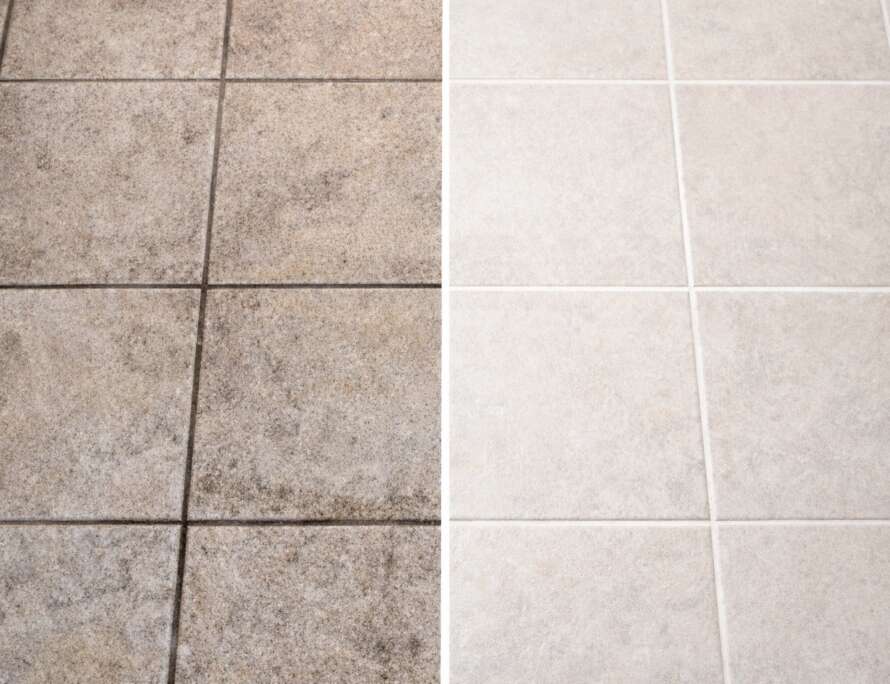
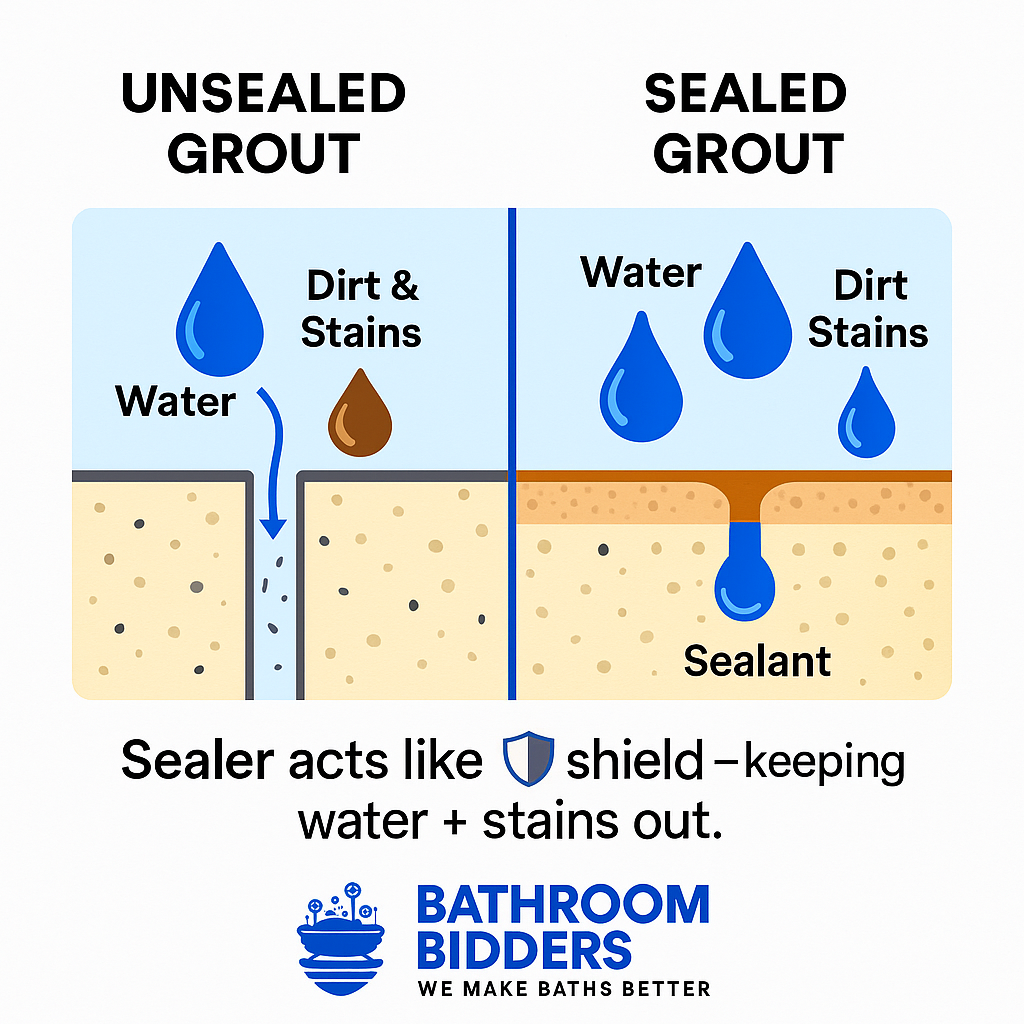
Stains creeping back across your kitchen floor? Shower grout dark the moment it gets wet? Hotel or restaurant bathrooms looking tired despite nightly mopping? Grout is porous — it absorbs water, colorants, soap scum, and odors. Without a consistent reseal schedule, you end up chasing stains instead of preserving surfaces and protecting subfloors.
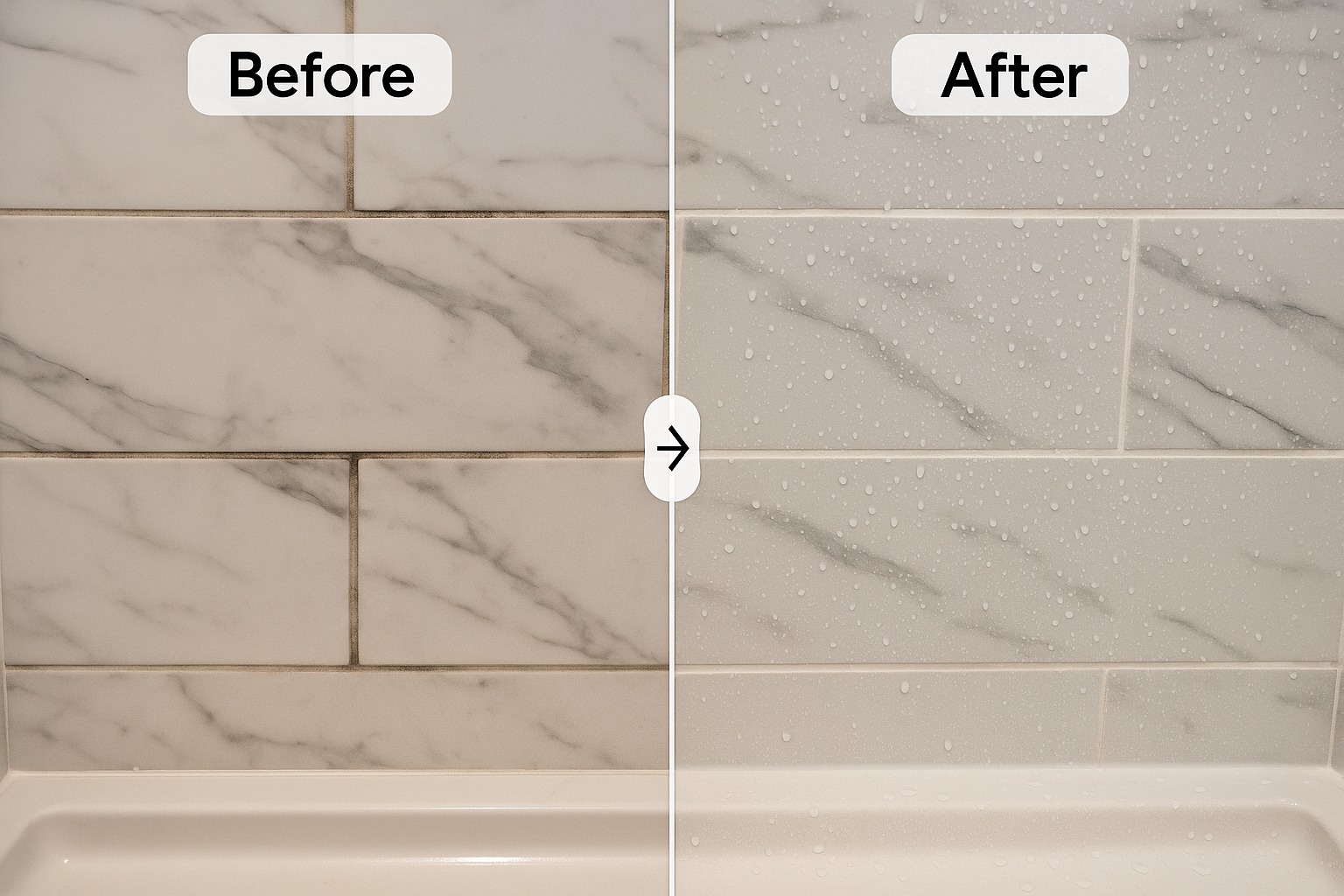
Quick sanity check: drip a few drops of water on a dry grout line. If it beads, you’re protected; if it soaks in and darkens, your sealer’s gone and it’s time to act. This Old House
Why grout needs resealing🔬
- Porosity + traffic: Cementitious grouts act like sponges. Foot traffic, moisture, and cleaning cycles wear away protection. Manufacturer guidance notes reseal frequency varies with exposure — sometimes yearly or every two years. CUSTOM Building Products
- Chemistry matters: Harsh/acidic or high-alkaline cleaners can damage stone and degrade sealers — keep care pH-neutral, especially around marble/limestone and other stone. omnisurfaces.com+1
- Cure + timing: New grout needs to cure before sealing (commonly 48–72 hours), then protect early and maintain on schedule. The Spruce
Grout Resealing Schedule for Homes and Commercial Properties 📅
Bathroom Bidders Grout Sealing Standards Across the KC Metro
- Default rule: Reseal every 2 years in most homes.
- High-use zones: Showers/kitchens every 12–18 months.
- Low-use areas: Up to 3 years if care is excellent.
- New installs: Seal twice in the first year (initial cure + follow-up).
- Buying/Selling: Reseal during prep to protect value and pass the “water test.”
Commercial Grout Care Cadence: Clean, Safe, and Compliant
- Restaurants & hotel bathrooms: every 6–12 months (spills, grease, nightly sanitation).
- Retail, bank & hotel lobbies, schools, churches: annually (appearance + heavy wear).
- Healthcare: every ~6 months (frequent disinfectants + hygiene standards).
Many consumer guides propose ranges (6–12 months in wet/high-traffic areas, sometimes up to 2–3 years elsewhere). Use them as a guardrail — your water-drop test and actual wear should drive the final call.
How to Know When It’s Time to Reseal Your Grout
- Water darkens grout instead of beading (fails the water test). This Old House
- Lingering stains you can’t lift; mildew odor in showers.
- Efflorescence (white powder) or blackened caulk lines.
- Floors look dull or dirty right after mopping (common in lobbies/restrooms).
Avoid These Costly Grout Mistakes ⚠️
- Sealing before cleaning: traps contamination; your “new seal” fails fast.
- “Band-Aid” caulking over deeper problems: repeated caulk ≠ fix; address moisture, clean, then seal.
- Wrong chemistry: vinegar/citrus on natural stone (or strong alkaline strippers) can etch/strip protection; stick to pH-neutral care. omnisurfaces.com+1
- Skipping new-build protection: after cure, seal promptly; early protection prevents first-year staining.
Best Grout Sealer: Penetrating vs. Topical and Why pH Balance Is Key
- Penetrating/impregnating sealers are the go-to for most grout and high-traffic floors; they protect below the surface without a plasticky film. (You may see color-enhancing variants for appearance.) Bob Vila
- Manufacturers emphasize pH-neutral day-to-day care and note that harsh cleaners/steam can shorten a sealer’s life — meaning you’ll reseal sooner. aquamix.com.au
- Reality check: Expected wear depends on usage; some surfaces last for years, while others require a yearly touch-up. Build resealing into your maintenance calendar — especially for restaurants and public restrooms.
Residential & Commercial quick-reference table 📊
| Space | Reseal Frequency | Why it works |
|---|---|---|
| 🏠 Home kitchens & busy baths | ~2 years (12–18 mo. if heavy use) | Spills, steam, daily traffic wear seal faster. |
| Guest baths & backsplashes | 2–3 years | Lower moisture & wear. |
| 🏨Restaurant & hotel bathrooms | 6–12 months | Spills/grease + nightly sanitation cycles. |
| 🏬Lobbies (retail, bank, hotel), schools, churches | Annually | Aesthetics + heavy foot traffic. |
| 🏥Healthcare | ~6 months | Disinfectants + hygiene standards. |
| New installations | Seal twice in year one | Early protection after cure prevents first stains. |
Tip: The water-drop test + visible wear should override any calendar if the surface says “I’m done.” This Old House
Grout Resealing Projects in Kansas City🏠🏬
- Residential: Shower grout turned dark instantly after skipping a reseal cycle. Deep clean + impregnating sealer → water beads on contact two years later; maintenance is now a quick wipe (pH-neutral), no harsh chemicals.
- Commercial: Restaurant lobby/restrooms looked dull despite nightly mopping. Post clean + reseal, the grout resisted stains for 12 months and janitorial hours dropped — fewer guest complaints, better first-impression.
Step-by-Step Guide to Resealing Grout the Right Way
- Test today: Water-drop test three spots (wettest area, highest traffic, a low-use corner). This Old House
- If it fails, schedule: Book a professional clean → dry → reseal. (Commercial: plan off-hours.)
- Choose the right sealer: Penetrating, pH-neutral-friendly for most grout/stone; color-enhancing only if aesthetics call for it. Bob Vila
- Protect new grout correctly: Wait for proper cure (often 48–72 hours), then seal. The Spruce
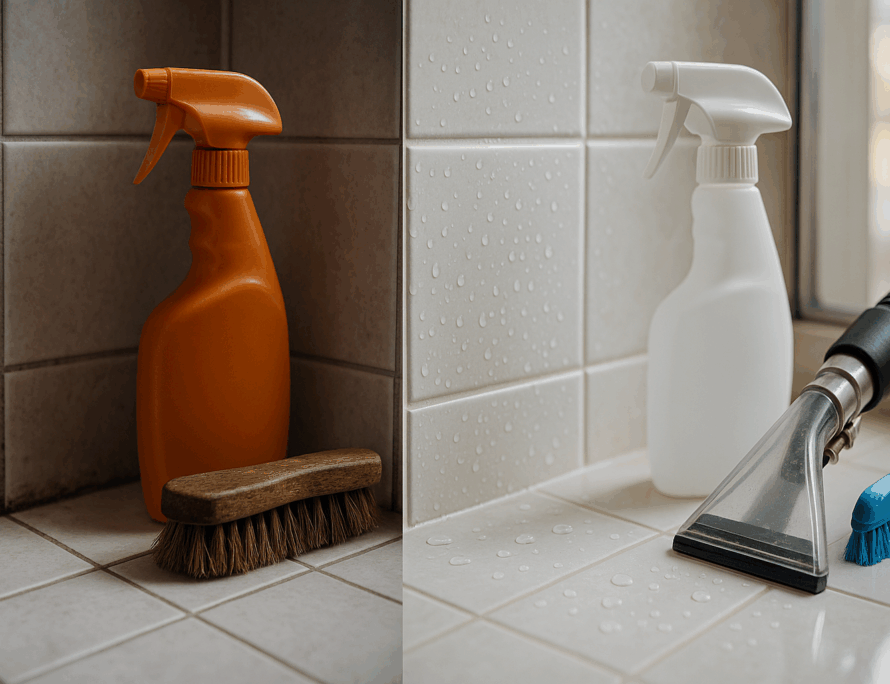
- Maintain smart: Ditch vinegar/citrus and high-alkaline strippers on stone; use pH-neutral cleaners so your sealer lasts. omnisurfaces.com+1
FAQ
How often should grout be resealed in homes vs. businesses?
Homes: typically every ~2 years (12–18 months in heavy-use showers/kitchens). Restaurants/hotel bathrooms: 6–12 months. Lobbies/retail/schools/churches: annually. Healthcare: ~6 months. (Ranges align with common guidance that high-moisture/high-traffic surfaces need more frequent sealing; confirm with a water-drop test.)
Does new grout need to be sealed right away?
After proper cure (often 48–72 hours), yes, then follow our schedule. Many manufacturers specify cure first, seal second.
What cleaners should I use after sealing?
Stick with pH-neutral products; avoid vinegar/citrus (acid) and strong alkaline strippers on natural stone — both can etch the surface or shorten sealer life.
How do I know it’s time if I’ve lost track?
Do the water-drop test; if it soaks in, reseal. This Old House
Pick your path 🎯
- Homeowner: 📅 Book a Free Grout Reseal Consultation — we’ll test, clean, and protect.
- Property Manager: 🛠️ Request a Commercial Maintenance Plan for lobbies, restrooms, kitchens, schools, churches, and clinics.
- Or grab our 📄 Grout Life & Reseal Checklist (
PDF) to test and track your spaces throughout the year.